The scoreboard at an 8U game tells you almost nothing. The real scoreboard is the one you cannot read for another five years: how many of these kids are still playing at thirteen. Most of them will not be — not because they ran out of talent, but because somewhere along the way they ran out of reasons to come back. That is the contest youth softball drills are actually being graded on, and a lot of them are quietly losing it.
Coaches pour their energy into mechanics — where the feet go, how the glove turns — and treat fun as the cherry on top, something you sprinkle in if practice ends early. The standard list of youth softball drills often reads like a shrunken copy of a varsity practice. But for a seven- or ten-year-old, fun is not the cherry. It is the entire reason she laces up, and the research is surprisingly blunt about what that means.
The Opponent Nobody Coaches Against
Every coach prepares to beat the team in the other dugout. Almost none prepare to beat the opponent that takes more players out of the game than any rival ever will: the slow drift toward “I don’t want to go to practice.” A child who is bored does not announce it with a speech. She just asks to skip the next one, then the one after, and one spring she does not sign up. No error caused that. The practices did. The cruel twist is that the most gifted kids are often the first to leave, because a practice that bores the average player bores the talented one twice as fast.
This reframes the whole job. At the youth level, development and retention are the same project, because a player who quits develops nothing. The most technically perfect drill on earth is worthless if it is the reason a kid decides softball is not for her.
Fun Isn’t the Reward, It’s the Plan
This is not soft sentiment; it is documented. A landmark study mapping what actually makes organized sport enjoyable for kids found that children name fun as the primary reason they play and its absence as the number-one reason they quit. Fun is not competing with skill development. Fun is the delivery system that keeps a player around long enough for skill development to happen at all. Lose the player in April and it will not matter what you could have taught her in July.
And here is the part that should change your practice plan: when researchers asked kids what “fun” actually meant, winning ranked near the bottom. Trying hard, a positive coach, being a good teammate, and getting better all ranked far higher. Fun, properly understood, is not goofing off. It is a fast, active, encouraging practice where everyone is busy and improving. Well-designed youth softball drills do not choose between fun and development — they discover the two were always the same thing.
Why Lines Are the Enemy of Youth Softball Drills
Picture eight kids in a single line waiting to field a ground ball. Each child fields roughly one ball a minute and stands idle for the other fifty-nine seconds, poking the dirt, watching a butterfly, drifting. You have built a machine for manufacturing boredom and called it practice. The most common flaw in youth softball drills is not a bad drill — it is a good drill strangled by a line that is too long.
The fix is unglamorous and total: shrink every line to two or three, get more balls and more hitters working at once, and run small stations so nobody is ever just watching. Reps per minute is the number that matters most at this age, because every idle minute is a minute a kid spends deciding whether she would rather be somewhere else. Count it sometime — actual touches per child per practice — and the number is usually far lower than it feels from the coach’s box.
Build an Athlete, Not a Shortstop
There is a temptation to specialize early — to drill a nine-year-old as if she already plays one position for a college team. Resist it. The players who are still thriving at sixteen are almost always the ones who stayed broad athletes at nine: kids who learned to sprint, change direction, skip, throw, and catch a dozen kinds of ball before anyone narrowed them down. Movement variety is itself a skill, and it is the foundation everything technical later gets built on.
So let youth softball drills be a little wild. Mix in tag, relay races, and reaction games that have nothing obviously to do with softball and everything to do with building a coordinated, confident mover. The athleticism transfers. The boredom of a hundred identical reps does not. A practice that sends home a kid who loves to move has done the most important developmental work of the season, long before anyone perfects a throw.
Drills That Hide the Work Inside a Game
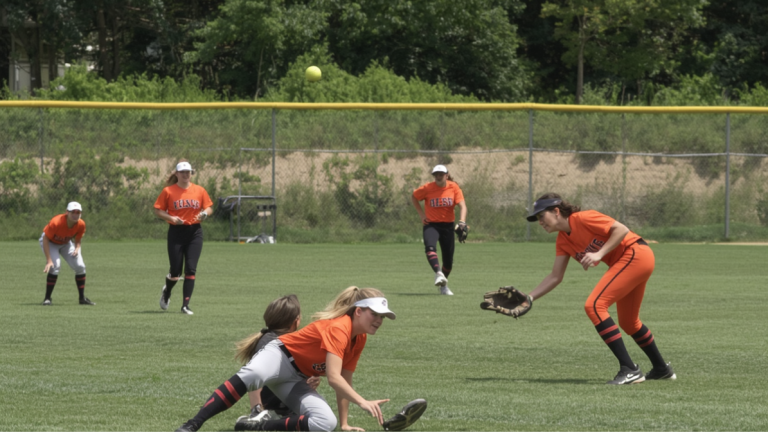
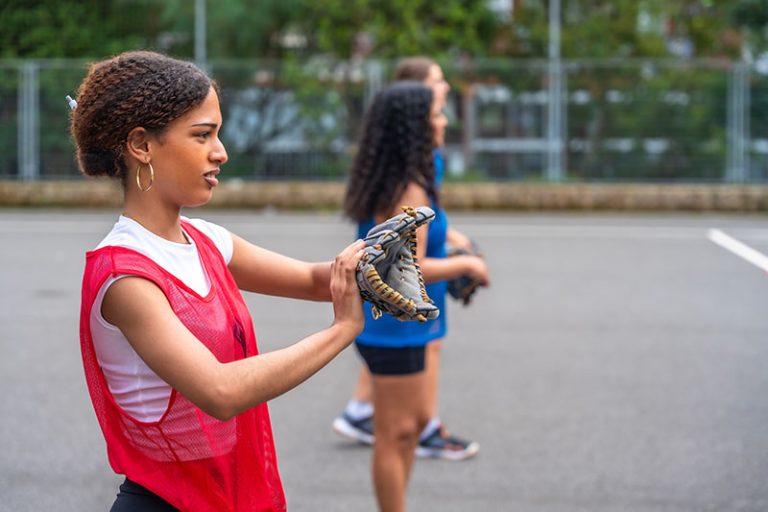
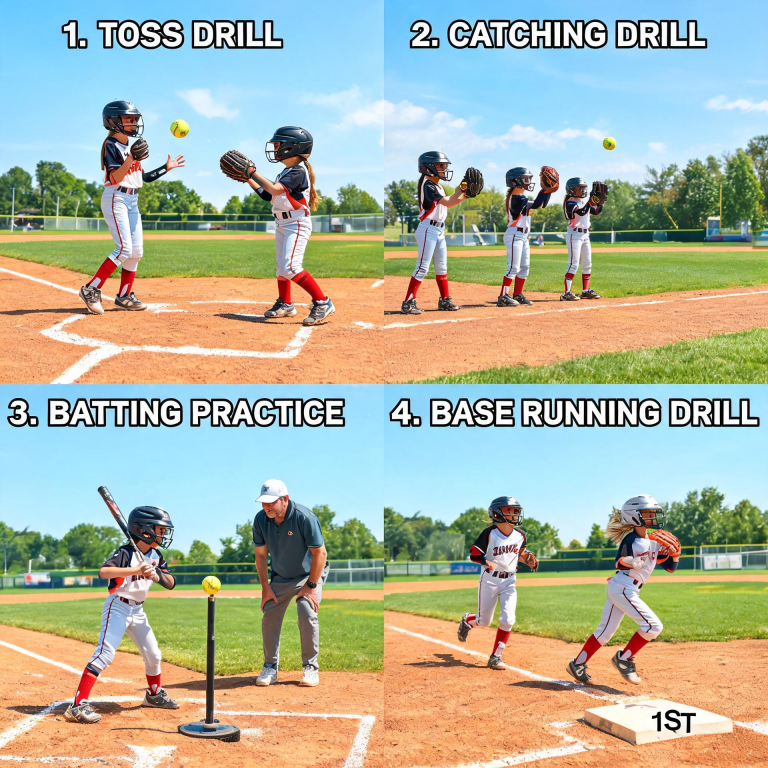
The trick to great youth softball drills is camouflage — burying real reps inside something that feels like play. Knockout fielding turns ground balls into a last-player-standing competition. A throwing-accuracy contest with a target on the fence turns a boring chore into a game with a winner. Sharks and minnows on the base paths teaches reads and reactions while kids think they are just running from a tagger. Even fielding footwork hides nicely inside a mirror game, where a partner shuffles and the fielder has to match her — react and move, no ball needed until the energy is already high.
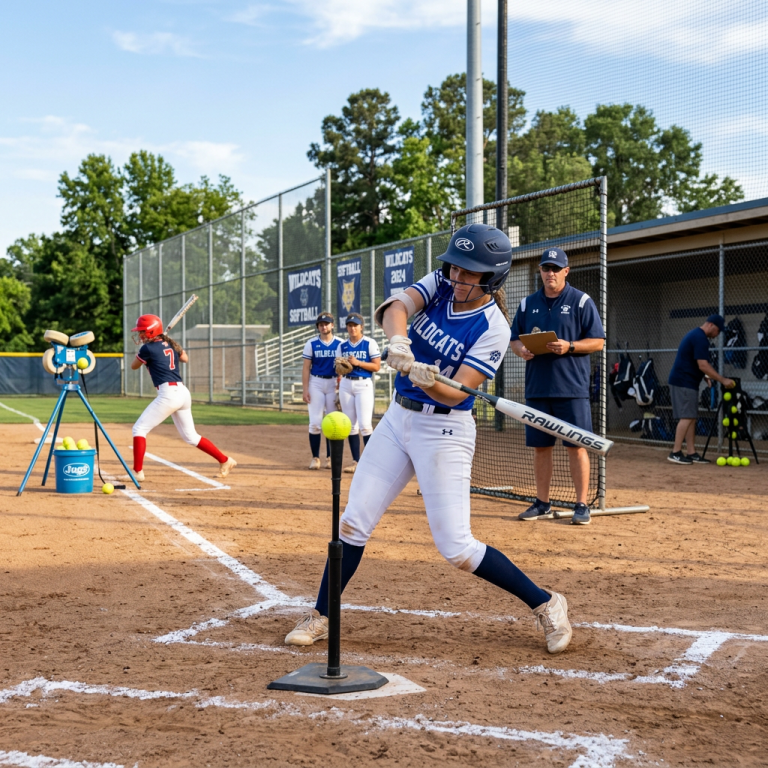
Even hitting becomes a home-run derby with a points board instead of a silent line at the tee. The skill being trained is identical to the drill on the standard sheet. The difference is that the kids are leaning in, asking to go again, instead of counting down to the water break. That request — “can we do that one more time?” — is the sound of a practice that is winning the long game.
Designing Youth Softball Drills That Kids Beg to Repeat
Three rules carry the whole approach. First, keep everyone moving — if a child is standing still, the drill is failing whether or not the mechanics are correct. Second, put a game around it — a score, a streak, a winner, a clock — because a stake turns effort on for free. Third, end on a high, with a favorite game or a small win, so the last memory of practice is the one she carries home. Run those rules over your youth softball drills and you stop choosing between teaching and keeping kids in the sport. You finally get to do both.
Youth Softball Drills: The Questions Parents and Coaches Ask
What are the best youth softball drills for 8U beginners?
Simple, fast, and dressed up as games. At 8U, lean on the basics — rolling grounders to soft hands, tee contact, short throws to a target — but wrap each in a competition or a relay so the reps fly by. The best youth softball drills for this age are explainable in thirty seconds, impossible to do while bored, and built so every kid touches a ball constantly. Skip anything that leaves children waiting in a long line for a turn, no matter how fundamental it looks on paper.
How long should youth softball drills last before kids lose focus?
Shorter than you expect. For most young kids, attention on a single activity starts to fade after five to ten minutes, so rotate before they check out rather than after. Quick, varied blocks keep energy high and beat one long drill every time. When you feel the energy dip, you waited too long — change it up sooner next round. A useful rule of thumb: if you are talking longer than the kids will be doing, the block is already too long.
Should youth softball drills focus on winning or development?
Development, and the kids agree with you more than you would guess. When asked what makes sport fun, children rank winning near the bottom and trying hard, improving, and good teammates near the top. Build youth softball drills around effort and getting better, keep score for the energy it brings rather than the outcome, and you serve both fun and growth at once.
How do I make youth softball drills fun without losing the teaching?
Stop treating them as opposites. Fun, for kids, largely means being active, encouraged, and visibly improving — which is exactly what good coaching delivers. Add a game wrapper, keep reps high, coach with encouragement instead of correction-by-lecture, and the teaching rides along inside the fun. The drill that kids love and the drill that works are usually the same drill run well.